Evidence review
How students write with Claude: mostly back and forth
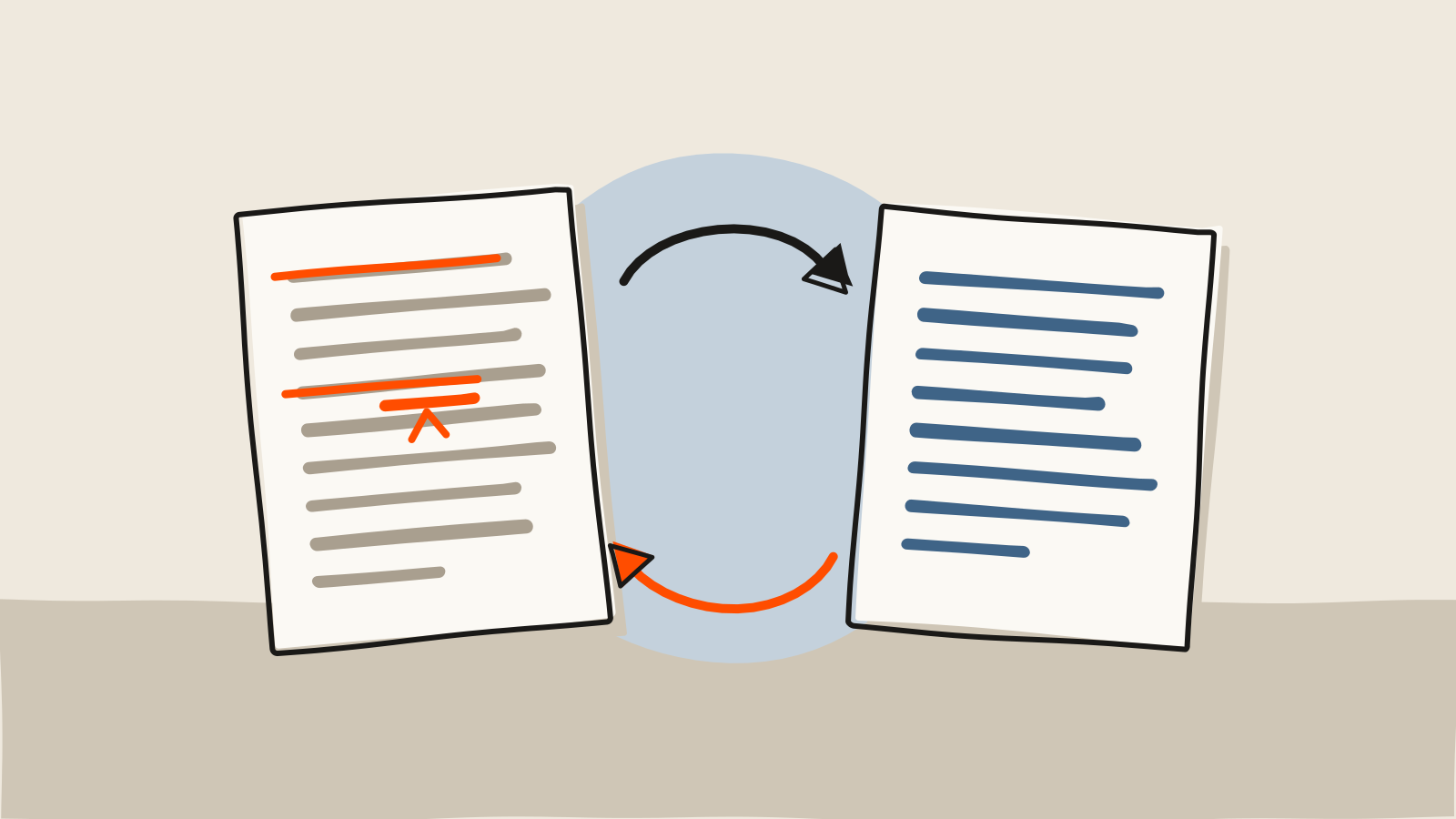
In Anthropic's study of 574,740 student chats with Claude, over half of requests for essays and other longer work were back-and-forth, in every subject.
By Slop Monkey Research5 min read
Anthropic, the company that makes the Claude chatbot, has published what it calls one of the first large-scale studies of how students use AI in real life. The Anthropic Education Report: How University Students Use Claude, by Kunal Handa, Drew Bent and colleagues (8 April 2025), sorted 574,740 student conversations on Claude.ai by what the student was after. We read it, and Anthropic's later usage data, for one question: when students use Claude to write, do they hand the work over, or work on it with Claude? Mostly the second. In every subject Anthropic charted, requests for essays and other longer work were more often back and forth than requests for a finished piece.
Slop Monkey is not affiliated with Anthropic: the findings below are Anthropic's, and where we recombine its numbers we say so. Slop Monkey sells a tool that rewrites AI drafts, so we have a stake in how students use AI to write.
Back and forth beat one-shot requests in every subject
Anthropic's conversations came from Claude.ai accounts tied to university email addresses over 18 days, and it says they "likely" capture early adopters. It classified them with Clio, an automated system that summarizes conversations and strips out private details (described in a December 2024 paper). Each conversation was sorted two ways. Did the student want a solution or explanation ("problem solving") or a longer piece of work such as an essay or a presentation ("output creation")? And did they want it as fast as possible ("direct") or did they work on it in dialogue with Claude ("collaborative")? Anthropic's examples: a direct output request was "Create academic text summaries and condensed versions"; a collaborative one was "Provide feedback and revision for student writing assignments".
Each of the four kinds made up between 23% and 29% of all student conversations, and Anthropic counted "nearly half (~47%)" as direct. But in each of the nine subjects it charted, collaborative output creation was larger than direct output creation. In the humanities, 32.9% of student conversations were collaborative output creation and 26.9% direct. In business it was 32.3% against 27.3%, and in social sciences and history 34.5% against 27.4%.
Put those figures together (our arithmetic, not a number Anthropic published) and, of each subject's requests for longer work, between 53% (health professions) and 60% (engineering) were back and forth. The student who pastes in an essay prompt and walks away with a finished essay is real, but in Anthropic's data that is a large minority of these conversations, not most of them.
Newer data shows the same split, sharpest on theses
Anthropic's Economic Index reports how Claude.ai conversations break down, including whether each looks like work, personal use or coursework. Coursework was 19% of conversations in November 2025 and 12% in February 2026, a fall Anthropic puts partly down to winter break in some countries. In May 2026, the latest month in its published data, it was 16%.
That data also says, for each request topic, how people worked with Claude. Two of Anthropic's patterns matter here: "directive", where "users give Claude a task and it completes it with minimal back-and-forth", and "task iteration", where users "iterate on tasks collaboratively with Claude". We took the eight largest topics that Anthropic's classifier marked at least 70% coursework in May 2026. Thesis writing, the second largest, was 66% back and forth and 26% handed over. Quiz assistance was the reverse: 56% handed over and 19% back and forth.
Rewriting for tone is a small slice of student use
We also estimated how much of all coursework each topic made up in May 2026, from its share of conversations and its coursework share (our arithmetic). Thesis writing alone was about 8% of coursework conversations. Anthropic's topic names come from its own clustering, so that topic may well include ordinary course papers. Topics closer to what an AI rewriting tool does were far smaller: tone rewriting about 0.9% of coursework conversations, essays about 0.7% and proofreading about 0.6%. Most conversations on those topics were not coursework at all; only 30% of tone rewriting and 21% of proofreading were.
What Anthropic itself flags
Anthropic does not treat back and forth as proof of learning. "Even Collaborative conversations can have questionable learning outcomes," the report says, and whether one counts as cheating "may also depend on specific course policies." Among the direct conversations it listed three examples it found concerning: answers to machine learning multiple-choice questions, "direct answers to English language test questions", and one close to home for a rewriting tool.
“Rewrite marketing and business texts to avoid plagiarism detection”
Anthropic, one of three “concerning” student requests in its April 2025 Education Report
Data: Anthropic, “Anthropic Education Report: How University Students Use Claude”, April 2025
Its response, announced with Claude for Education on 2 April 2025, was a Learning mode that "guides students' reasoning process rather than providing answers". Its usage policy, in the version in force from 12 November 2026, bars using Claude to "Plagiarize or submit AI-assisted work without proper permission or attribution." Teachers lean on it too: in Anthropic's August 2025 report on educators, 48.9% of grading-related conversations were automation-heavy, with the AI doing the task directly.
Back and forth still changes the words
Working on an essay with Claude is not the same as writing it alone. In a study of our own, not Anthropic's, an AI asked only to fix spelling and grammar left a median 94% of each student's words unchanged, and one open AI detector still flagged 31% of 150 essays afterwards. Surveys of students point the same way as Anthropic's data: most use AI for schoolwork, and far fewer say they hand in what it writes.
In Anthropic's own records of how students use Claude, a request for an essay or other longer work was more often a back and forth than an order for the finished thing, and the handoffs it worried about most were quick answers to tests and quizzes. For a student, that is what most AI help with writing looks like. For a teacher, it means a piece of work can carry AI's words without having been written by AI from the start.